
The Equipment & detection systems category brings together every hardware layer used in civil airspace awareness: passive RF sensors, Remote ID receivers, optical and thermal EO/IR cameras, acoustic arrays, cooperative aircraft receivers, and integrated multi-sensor platforms.
How the technology works and what it detects
No single sensing modality covers every drone flight profile. Passive RF sensors detect commercial control and video downlinks at long range; Remote ID receivers decode standardized drone and pilot telemetry; EO/IR cameras provide day/night visual confirmation including radio-silent aircraft; and acoustic arrays detect rotor noise with zero RF emissions. Matching hardware layers to your site's terrain and threat model prevents blind spots and minimizes false alarms.
Key selection criteria for civil sites
- Terrain, obstructions, and mounting elevation: unobstructed line of sight directly governs real-world detection range across RF, Remote ID, and EO/IR hardware.
- Threat profile: decide whether compliant Remote ID visibility is sufficient or whether non-compliant RF and radio-silent autonomous drones must also be detected.
- Deployment form factor: permanent weatherproof masts (IP65/IP67, PoE), rapid-deploy mobile kits/trailers, or personal wearable detectors.
- Open integration interfaces (REST API, SAPIENT, ATAK, ONVIF) to feed alerts into your existing C2 software, VMS, or security operations center.
Comparison of representative models in this category
| Model | Manufacturer | Deployment | Primary strength |
|---|---|---|---|
| RF-360 | Dedrone | Fixed | Urban passive RF detection |
| Dronetag Scout | Dronetag | Fixed 24/7 | Direct Remote ID monitoring |
| Ranger HDC | Teledyne FLIR | Mast / tower | Long-range EO/IR verification |
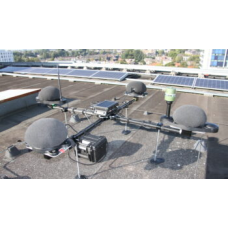
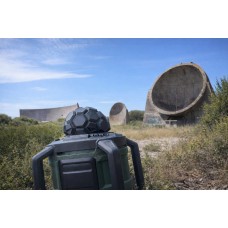
| Discovair G2 Plus | Squarehead Technology | Rooftop / perimeter | 128-mic passive acoustic array |
Site planning, integration & procurement checklist (RFQ)
- Site geometry and line-of-sight review: before finalizing models, prepare a perimeter layout with roof or mast elevations, priority approach sectors, and local sources of RF or acoustic interference.
- Power, network, and cybersecurity readiness: confirm PoE or AC/DC power availability, backhaul links, and whether your IT policy requires air-gapped on-premises servers or permits cloud dashboards.
- Alerting and escalation workflows: define who monitors 24/7 alerts, whether automated camera cueing (slew-to-cue) is needed, and what export formats are required for incident reporting.
- Formal quotation and manufacturer documentation: we prepare tailored RFQs with recommended system configurations, lead-time estimates, and delivery options across the UK, EU, and worldwide.
Frequently asked questions (FAQ)
Is civil drone detection hardware legal to deploy in the EU and UK?
Yes. Every hardware system in our catalogue is strictly passive detection-only equipment without jamming or active mitigation, aligning with civil airspace regulations.
Which sensor layer should a site deploy first?
Most civil sites start with passive RF detection for broad commercial drone coverage or Remote ID for budget compliance, then add EO/IR or acoustic layers for verification.
Can hardware from different manufacturers work together?
Yes. Many sensors support open standards such as REST APIs, SAPIENT, and ATAK so they can be fused inside a single vendor-agnostic C2 platform.
How do I request pricing, lead times, and sizing support for my site?
Submit an RFQ with your site perimeter details, target quantity, and integration requirements. We will prepare a formal quote with delivery options to the UK, EU, or worldwide; final technical specifications are governed by the official manufacturer datasheet and order confirmation.
Related technologies
To build resilient, layered civil airspace awareness, teams typically combine this category with complementary sensing and software layers:
- RF detection
- Remote ID receivers
- EO/IR & thermal imaging
- Acoustic detection
- Multi-sensor systems
- Command & control (C2)
All products supplied by Drone Detectors (AEROTRACE TECHNOLOGIES LTD, United Kingdom) are detection-only civil monitoring solutions without jamming or active mitigation. Formal quotes (RFQ) and configurations are prepared on request with delivery to the UK, EU, and worldwide.