
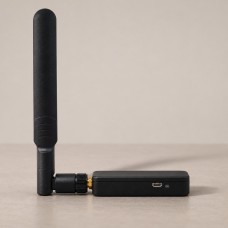
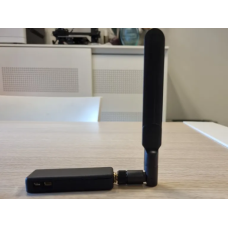
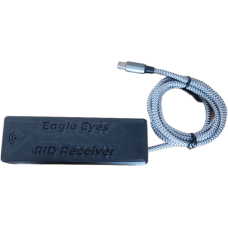
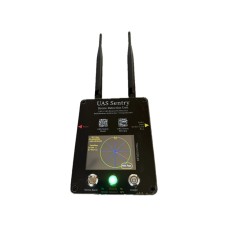
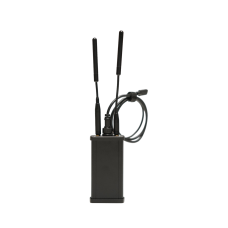

Remote ID receivers decode the digital license plates broadcast by civil drones under EU (ASD-STAN EN 4709-002) and U.S. (ASTM F3411 / FAA) rules. They are the fastest, most cost-effective way to obtain exact drone coordinates, serial IDs, altitude, and operator location.
How the technology works and what it detects
Direct Remote ID operates over Bluetooth 4/5 (including Coded PHY Long Range) and Wi-Fi Beacon / Wi-Fi NAN on 2.4 GHz and 5 GHz. Unlike passive RF direction finding, a single Remote ID receiver directly reads the drone's GPS coordinates, speed, and takeoff/pilot location. Its key limitation is compliance dependency: modified, legacy, or non-broadcasting drones will not appear on Remote ID alone and require a passive RF or EO/IR companion layer.
Key selection criteria for civil sites
- Full 4-protocol coverage: verify support for Bluetooth 4, Bluetooth 5 Long Range, Wi-Fi Beacon, and Wi-Fi NAN across 2.4 GHz and 5 GHz.
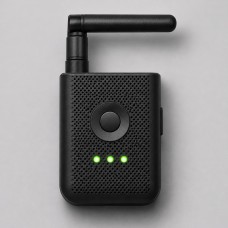
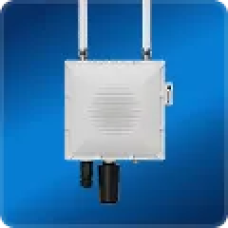
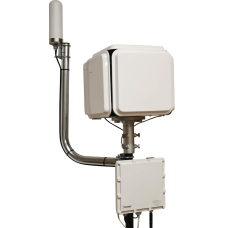
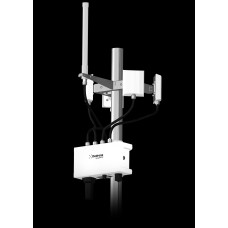
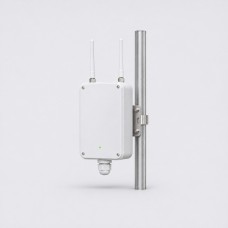
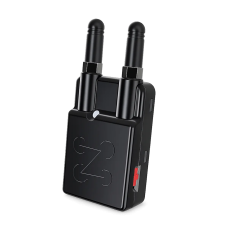
- Form factor: choose pocket/handheld units (Dronetag RIDER, Z-SCAN Mini, UAS Sentry V4) for mobile teams or PoE/LTE outdoor stations (Dronetag Scout, DroneScout ds240) for 24/7 sites.
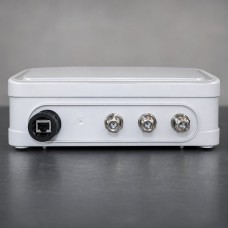
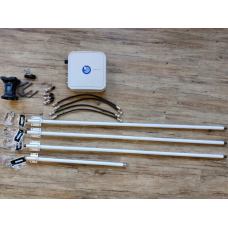
- External antenna ports: SMA/N-type connectors significantly extend line-of-sight reception over airfields and industrial campuses.
- Open data interfaces (MQTT, HTTP, OpenDroneID, ATAK) for seamless logging and C2 or UTM integration.
Comparison of representative models in this category
| Model | Manufacturer | Deployment | Primary strength |
|---|---|---|---|
| Dronetag Scout | Dronetag | Fixed IP67 | 24/7 EU/FAA Remote ID station |
| Dronetag RIDER | Dronetag | Pocket portable | Lightweight mobile patrol |
| DroneScout ds240 | BlueMark Innovations | Fixed PoE | Open MQTT/HTTP integration |
| GoTAK RIDAR | GoTAK | Field ATAK | Remote ID + ADS-B in ATAK |
Site planning, integration & procurement checklist (RFQ)
- Site geometry and line-of-sight review: before finalizing models, prepare a perimeter layout with roof or mast elevations, priority approach sectors, and local sources of RF or acoustic interference.
- Power, network, and cybersecurity readiness: confirm PoE or AC/DC power availability, backhaul links, and whether your IT policy requires air-gapped on-premises servers or permits cloud dashboards.
- Alerting and escalation workflows: define who monitors 24/7 alerts, whether automated camera cueing (slew-to-cue) is needed, and what export formats are required for incident reporting.
- Formal quotation and manufacturer documentation: we prepare tailored RFQs with recommended system configurations, lead-time estimates, and delivery options across the UK, EU, and worldwide.
Frequently asked questions (FAQ)
What is the typical detection range of a Remote ID receiver?
With clear line of sight and external antennas, fixed stations typically achieve 1 to 5+ km depending on the drone's broadcast protocol (Bluetooth 5 Long Range and Wi-Fi NAN reach farthest).
Does deploying a Remote ID receiver require a radio license?
No. Remote ID receivers are strictly passive listeners decoding public aviation safety broadcasts.
How do I cover drones that turn off or lack Remote ID?
Combine a Remote ID receiver with a passive RF sensor (such as Dedrone RF-360, SentryCiv, or ARDRONIS Detect) to catch non-compliant transmissions.
How do I request pricing, lead times, and sizing support for my site?
Submit an RFQ with your site perimeter details, target quantity, and integration requirements. We will prepare a formal quote with delivery options to the UK, EU, or worldwide; final technical specifications are governed by the official manufacturer datasheet and order confirmation.
Related technologies
To build resilient, layered civil airspace awareness, teams typically combine this category with complementary sensing and software layers:
All products supplied by Drone Detectors (AEROTRACE TECHNOLOGIES LTD, United Kingdom) are detection-only civil monitoring solutions without jamming or active mitigation. Formal quotes (RFQ) and configurations are prepared on request with delivery to the UK, EU, and worldwide.