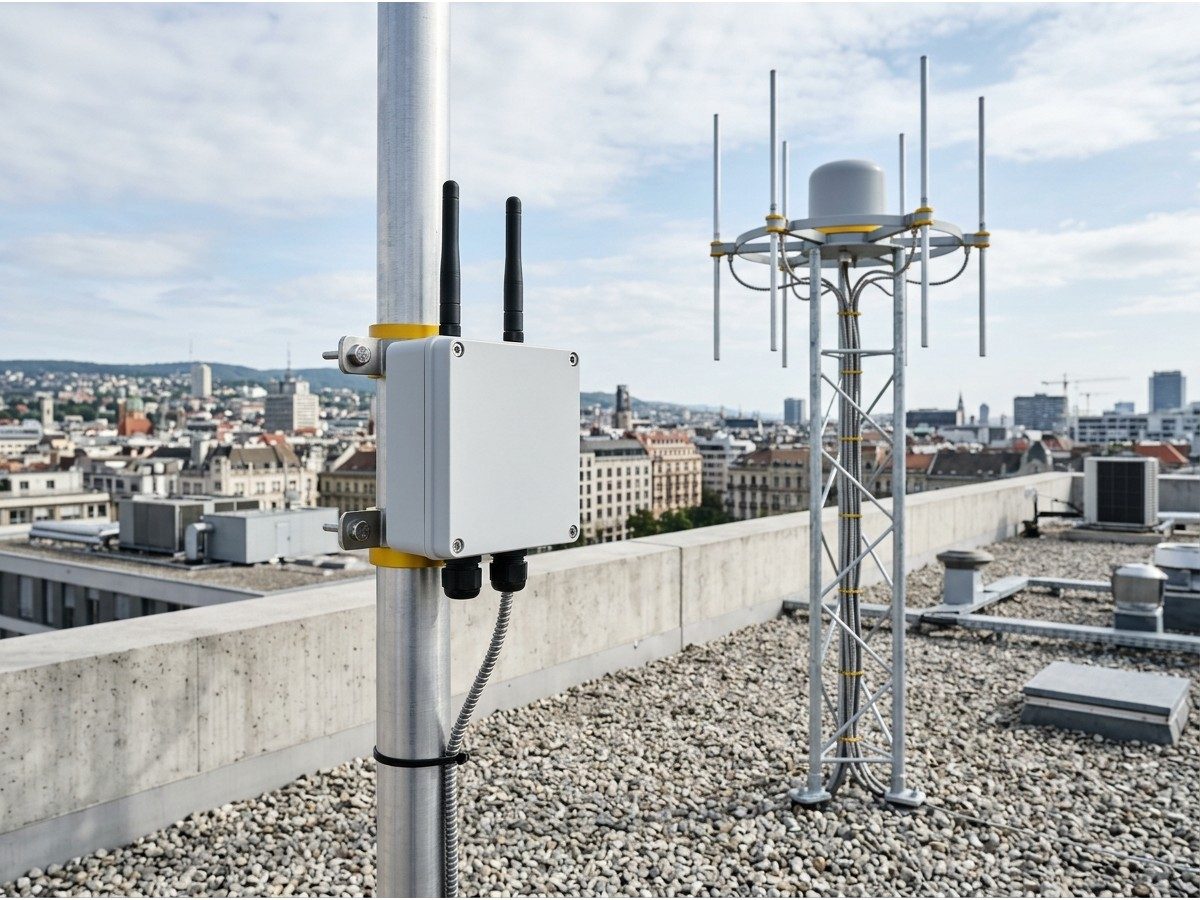
Remote ID receivers deliver ultra-low cost per square kilometer and near-zero false alarms for compliant broadcasting drones, yet remain blind to legacy, modified, or non-cooperative aircraft — which passive RF sensors catch reliably.
Key Differences & Engineering Breakdown
When evaluating Direct Remote ID receivers and passive RF drone detectors, real-world performance depends on sensing physics, power architecture, environmental sealing, and C2 integration. Remote ID receivers deliver ultra-low cost per square kilometer and near-zero false alarms for compliant broadcasting drones, yet remain blind to legacy, modified, or non-cooperative aircraft — which passive RF sensors catch reliably. The table below compares verified manufacturer specifications from the Drone Detectors catalog.
Side-by-Side Technical Comparison
| Model | Declared Range | Frequency / Sensing | Power & IP | C2 / Integration | Pricing |
|---|---|---|---|---|---|
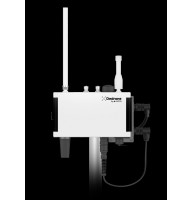
| Dronetag Scout | Up to 10 km omni; up to 25 km directional (manufacturer data) | Dual-band 2.4 GHz & 5 GHz Remote ID reception + built-in LTE cellular | PoE IEEE 802.3af / 802.3at (no battery, 24/7 stationary); 6 W typical, 10 W max.; IP67 / NEMA-6 (waterproof & dust-tight with integrated enclosure heater) | Dronetag Platform (cloud/API) & third-party C2 / UTM integrations | Buy Online |
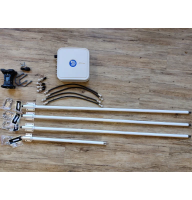
| BlueMark Innovations DroneScout ds240 | 15 km radius / 700 km² (manufacturer estimate) | Tri-band Remote ID reception: 2.4 GHz, 5.2 GHz & 5.8 GHz (long-range up to 15 km radius) | PoE IEEE 802.3af / 802.3at; typical consumption < 5 W; IP67 (outdoor weatherproof enclosure) | MQTT/JSON, MAVLink, DroneScout Dashboard, local web UI & third-party C2 | Buy Online |
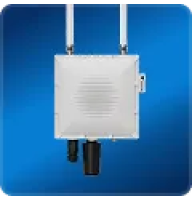
| Dedrone RF-560 | Typically up to 5 km omni; up to 8 km directional | Multi-band RF spectrum (control links, Wi-Fi Beacon, OcuSync, Lightbridge & Remote ID bands) | AC 100–240 V, 50/60 Hz (max. 1 A); 40 W typical; IP65 (outdoor weatherproof enclosure) | DedroneTracker.AI (cloud or on-premises via Ethernet / cellular) | Price on Request (RFQ) |
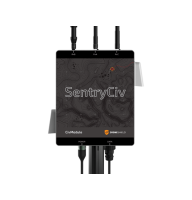
| DroneShield SentryCiv | On request | Commercial drone RF bands + Remote ID channels (100% passive sensing) | Continuous fixed-site mains/PoE power for 24/7 operation (per site configuration); Ruggedized outdoor fixed-site enclosure for 24/7 weather exposure | Sentry-C2 Civ / DroneSentry-C2 (cloud or on-premises) | Price on Request (RFQ) |
When to Choose Each Option: Practical B2B Scenarios
In practice, the right choice hinges on your threat model and site constraints. Where rapid rollout and transparent unit pricing matter most, start with direct online models or single-sensor baseline audits. For RF-congested urban sites or critical infrastructure facing non-cooperative drones, prioritize hardware direction finding (AoA/TDoA) and layered visual confirmation.
- Dronetag Scout (Buy Online) — Dual-band 2.4 GHz & 5 GHz Remote ID reception + built-in LTE cellular. Declared Range: Up to 10 km omni; up to 25 km directional (manufacturer data). C2 / Integration: Dronetag Platform (cloud/API) & third-party C2 / UTM integrations.
- BlueMark Innovations DroneScout ds240 (Buy Online) — Tri-band Remote ID reception: 2.4 GHz, 5.2 GHz & 5.8 GHz (long-range up to 15 km radius). Declared Range: 15 km radius / 700 km² (manufacturer estimate). C2 / Integration: MQTT/JSON, MAVLink, DroneScout Dashboard, local web UI & third-party C2.
- Dedrone RF-560 (Price on Request (RFQ)) — Multi-band RF spectrum (control links, Wi-Fi Beacon, OcuSync, Lightbridge & Remote ID bands). Declared Range: Typically up to 5 km omni; up to 8 km directional. C2 / Integration: DedroneTracker.AI (cloud or on-premises via Ethernet / cellular).
- DroneShield SentryCiv (Price on Request (RFQ)) — Commercial drone RF bands + Remote ID channels (100% passive sensing). Declared Range: On request. C2 / Integration: Sentry-C2 Civ / DroneSentry-C2 (cloud or on-premises).
Procurement, Deployment & Civil Compliance Notes
Before requesting a formal quote (RFQ), verify rooftop or mast elevation, available power (PoE 802.3af/at/bt vs AC 100–240 V), IT governance (cloud LTE vs on-premises/air-gapped LAN), and whether operators require automated EO/IR video confirmation. Drone Detectors (operated by AEROTRACE TECHNOLOGIES LTD, UK) is an independent civil retailer supplying passive detection-only systems without jamming, with delivery to the UK, EU, and worldwide.
Frequently Asked Questions (FAQ)
Can models from this comparison be combined in a single C2 platform?
Yes. Most critical sites fuse passive RF, Direct Remote ID, and EO/IR verification cameras inside one C2 platform to eliminate single-sensor blind spots.
Do passive RF, Remote ID, EO/IR, or acoustic sensors require transmit licenses?
No. All passive receivers and optical/acoustic sensors emit zero RF energy and cause zero interference with civil communications.
How do we procure these systems for our site?
Open any linked product page to order directly online (for priced models) or submit an RFQ with your site perimeter, power availability, and delivery country.
Related Categories & Core Technical Guides
Explore full specifications in Remote ID receivers, RF detection, and read our foundational guides: Detection Technologies Guide, Site-Based Sensor Selection, Incident Records Guide.
Last reviewed: · Reviewed by: Arthor Holland Michel, Drone Detectors Editorial Team