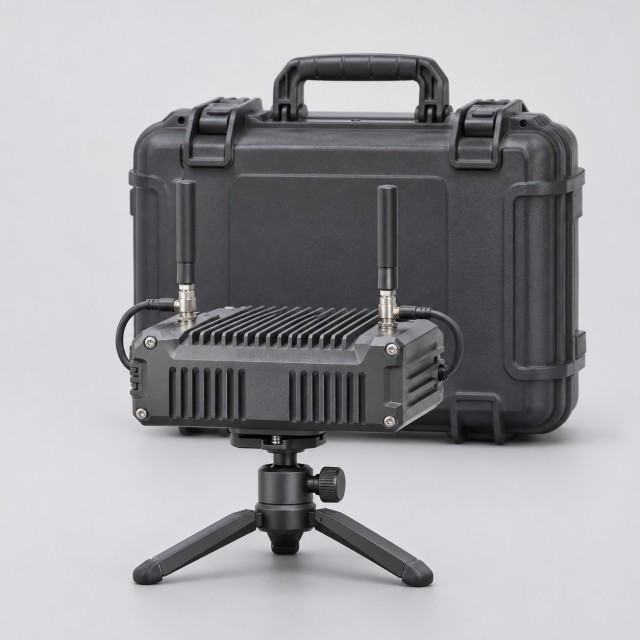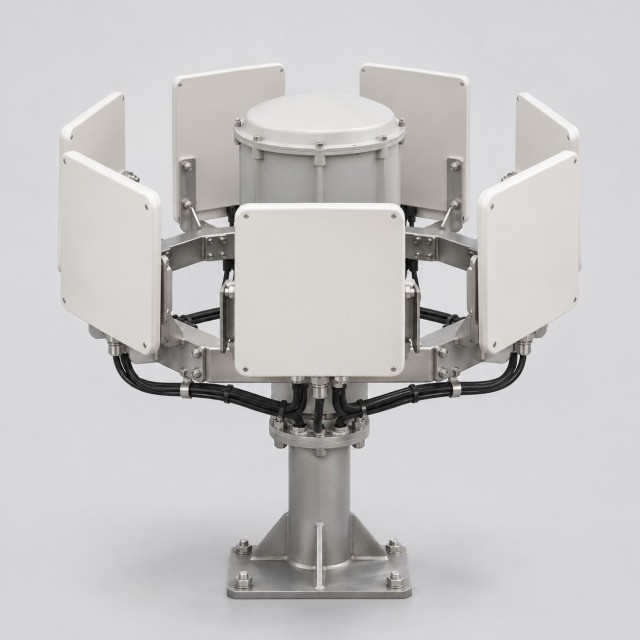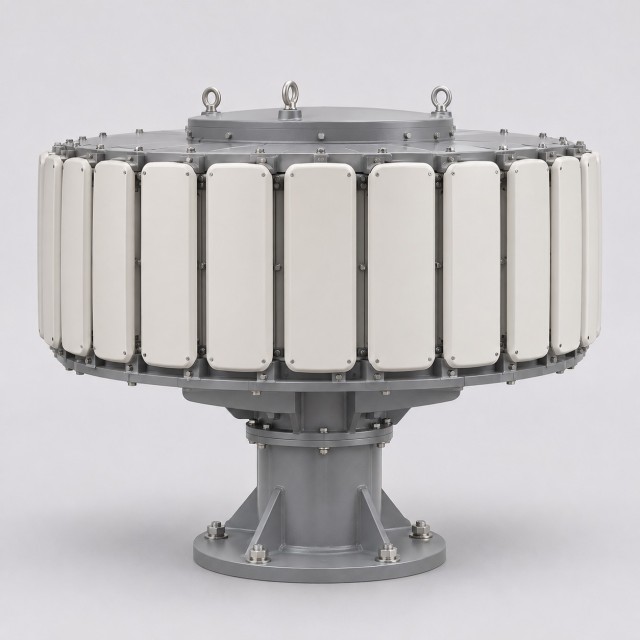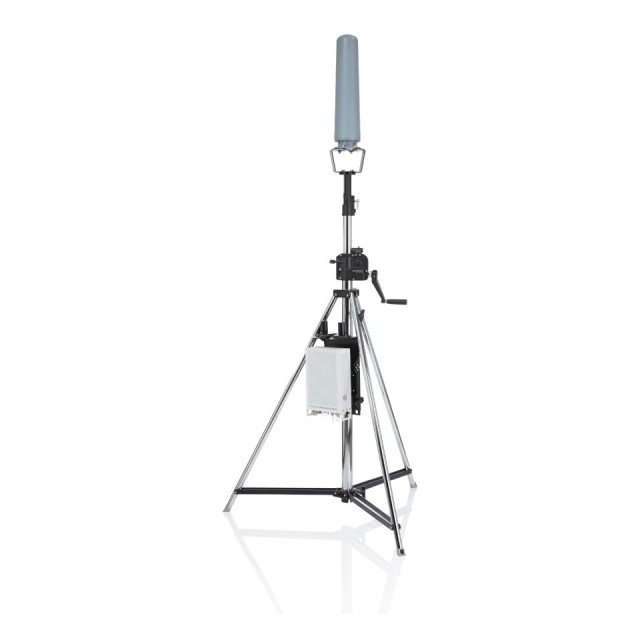
RF-160
Price on Request
 Drone detection hardware and software


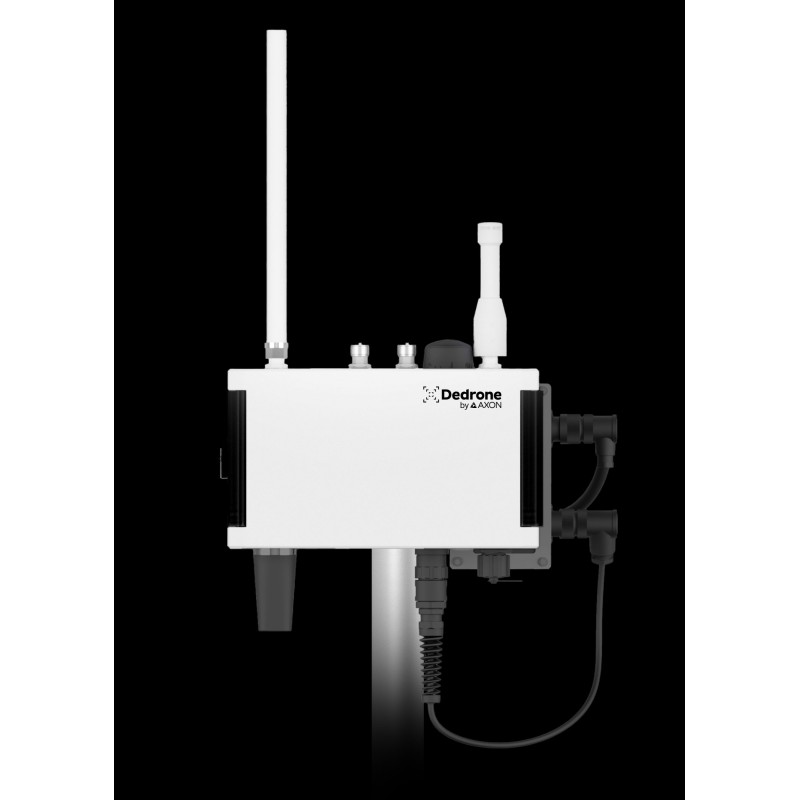
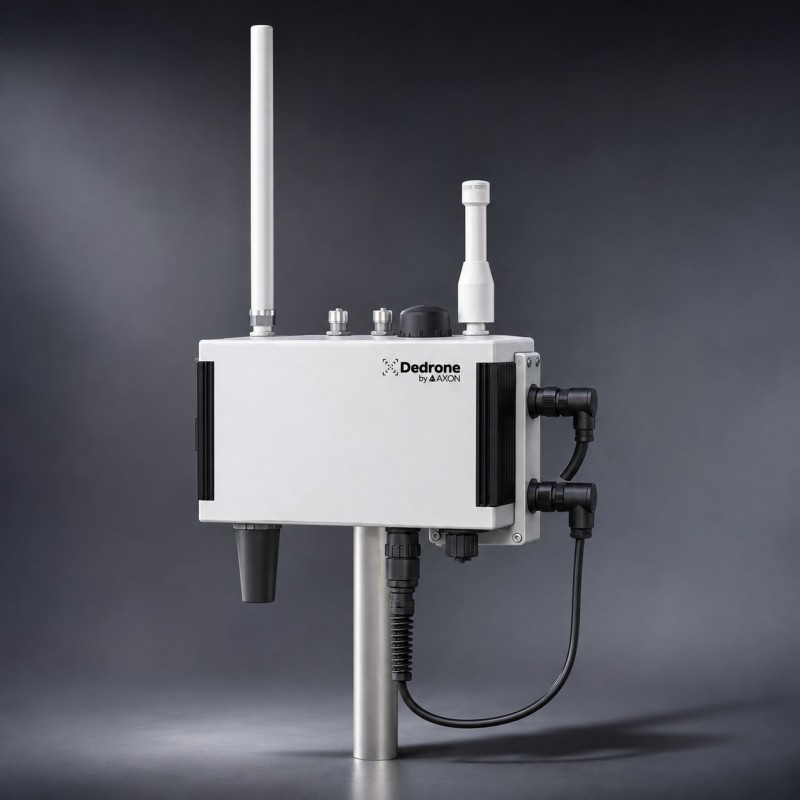
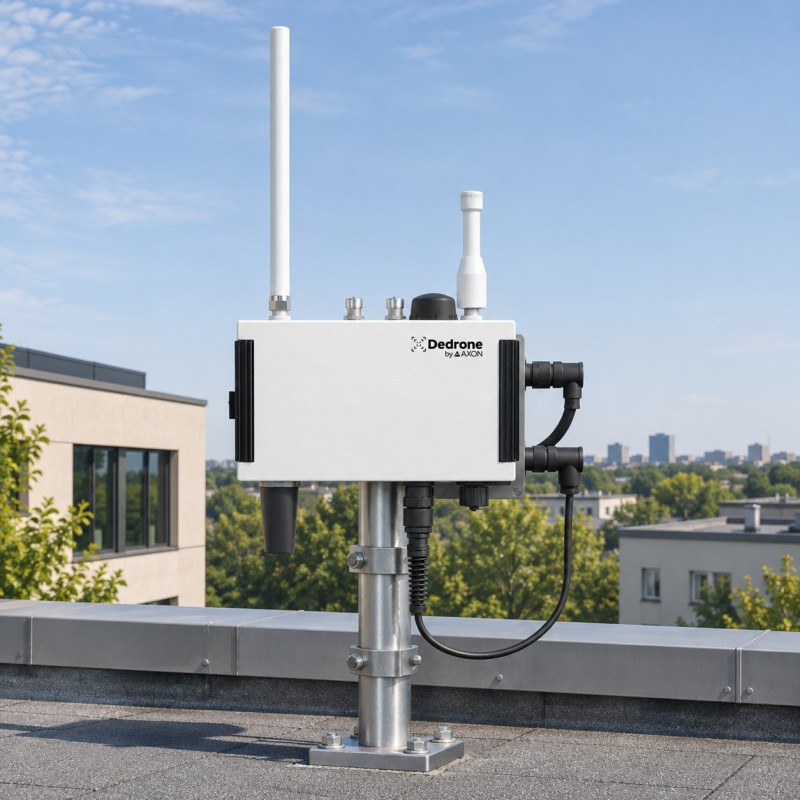
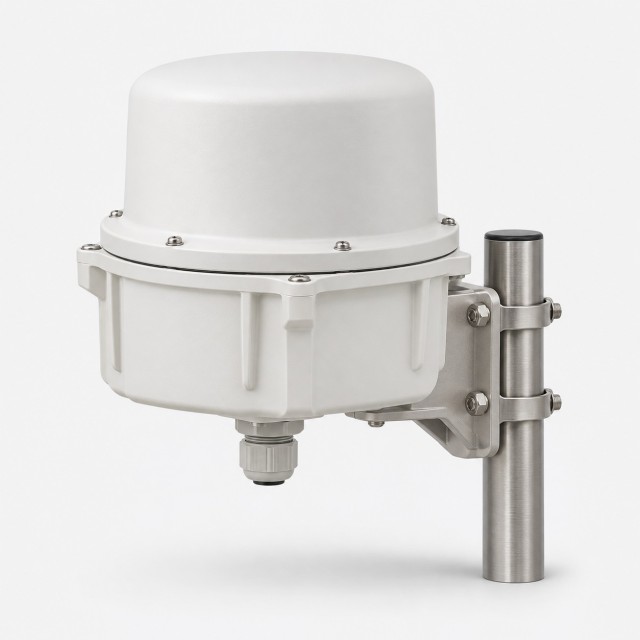
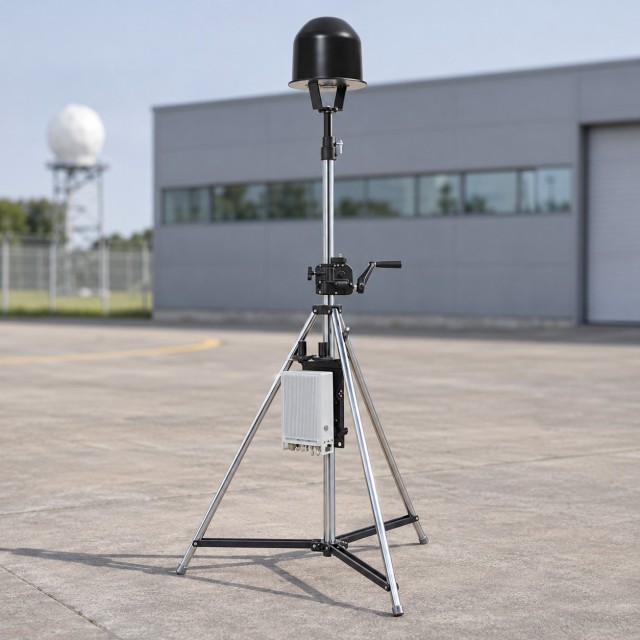
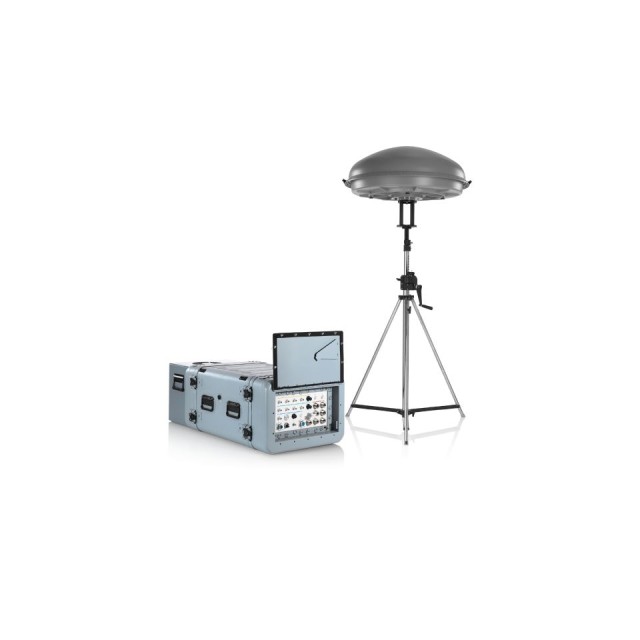
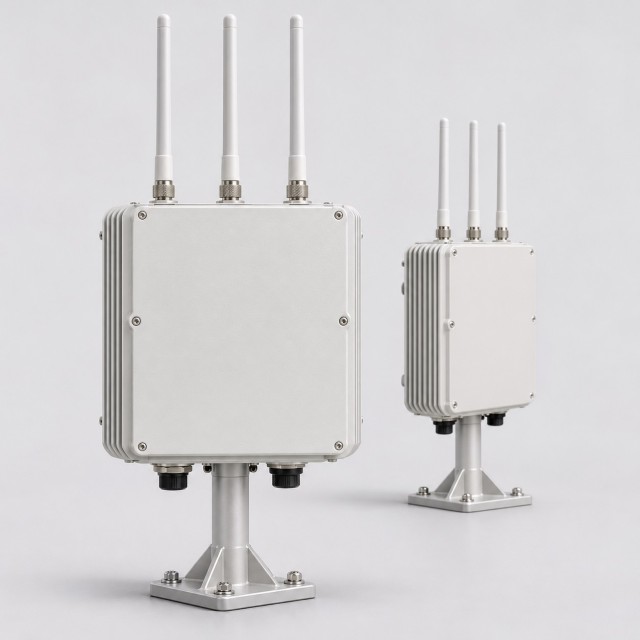
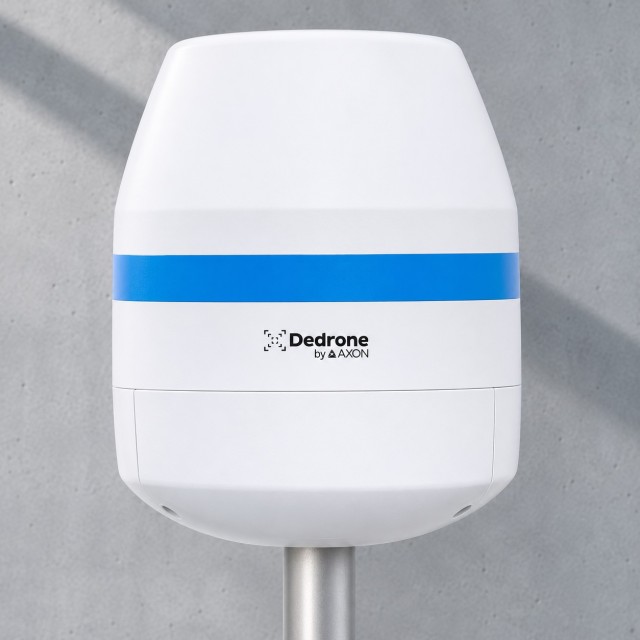
Dedrone RF-560 is an advanced, long-range passive RF direction-finding sensor engineered to detect, classify, and geolocate Remote ID and selected non-cooperative drone protocols in complex, high-interference environments. It is built for wide perimeters such as airports, ports, utilities, and multi-site infrastructure.
Detection range reaches up to 5 km (3.1 mi) with omnidirectional 360° antennas and up to 8–10 km (5+ mi) with 180° directional sector antennas under line of sight. It covers multi-band RF links including Remote ID, Wi-Fi Beacon, OcuSync, and Lightbridge.
Housed in an IP65 outdoor enclosure, the RF-560 runs on AC 100–240 V (50/60 Hz, max. 1 A) with 40 W typical power draw and connects via Ethernet or cellular backhaul.
Native integration with DedroneTracker.AI enables multi-sensor triangulation, radar/EO-IR fusion, automated alerting, and forensic incident reporting across single or distributed sites.
Unlike the RF-160 and RF-360, the RF-560 requires AC mains power rather than PoE and benefits from site-specific antenna planning (360° vs 180°). As a passive RF sensor, it does not detect completely non-emitting autonomous drones without complementary optical or radar layers. We supply detection-only equipment and software for civil airspace awareness, without jamming or active counter-UAS mitigation.
Choose RF-560 when you need extended detection range (up to 5–10 km), superior resilience in RF-dense cities, or combined long-range Remote ID and non-cooperative RF localization.
No — RF-560 is powered via AC 100–240 V (40 W typical).
Yes, via DedroneTracker.AI it can slew compatible EO/IR and PTZ cameras onto detected targets.
Drone Detectors (operated by AEROTRACE TECHNOLOGIES LTD, United Kingdom) is an independent online retailer of civil drone detection equipment and software — not an official distributor or authorised representative of the manufacturers. Pricing for this system is provided on request (RFQ): share your site layout and required configuration to receive a formal commercial quote. We deliver to the UK, EU and worldwide, with returns processed via our Warsaw warehouse. Technical data is sourced from the manufacturer; the order confirmation and official manufacturer datasheet are decisive.
To compare sensor families and plan site coverage, see our technical guides:
Official manufacturer documentation: