


A drone over a full stadium or festival site can stop a match or a show within seconds. Venues need detection that covers the bowl and the approaches, works in a crowd of thousands of phones, and can be moved to temporary sites for concerts and public events. This page collects the models in our catalogue whose manufacturers name stadiums, major events or temporary sites among their intended uses. All equipment is passive and detection-only.
What venue and event drone detection has to do
- Cover the venue and its approaches, so that security sees a drone before it is over the crowd.
- Cope with a dense RF environment: tens of thousands of phones, broadcast links and staff radios on match or show day.
- Locate the pilot in the surrounding streets and car parks, where stewards and police can reach them.
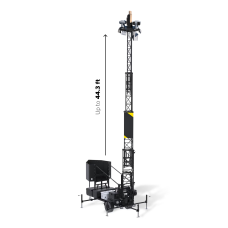
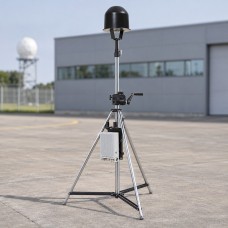
- Deploy fast for temporary sites: trailer, tripod and belt-worn options for concerts, parades and VIP visits, alongside fixed sensors for permanent venues.
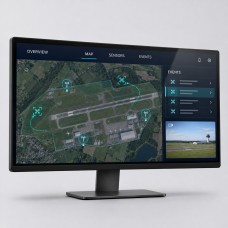
- Share one picture with the event control room, police and organisers, and keep incident records.
Models for stadiums, venues and events
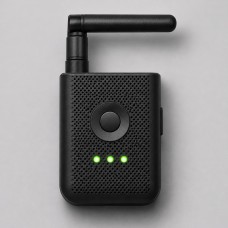
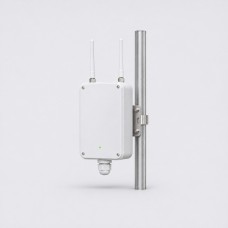
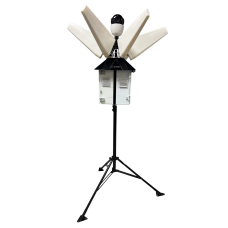
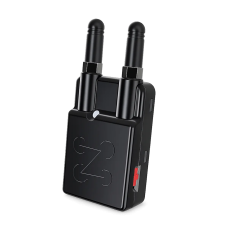
The table lists permanent and rapid-deploy options: fixed RF and Remote ID sensors for stadiums and campuses, a trailer-mounted multi-sensor system and portable receivers for temporary sites, and C2 software for the control room.
| Layer | Model | Manufacturer |
|---|---|---|
| RF detection & direction finding | ARDRONIS Locate Compact | Rohde & Schwarz |
| Remote ID receivers | AirWarden Receiver | AeroDefense |
| Z-SCAN Mini | Zing Drone Solutions | |
| RIDER | Dronetag | |
| Multi-sensor systems | DedroneTrailer+ | Dedrone |
| Z-SCAN | Zing Drone Solutions | |
| C2 & incident software | Dedrone C2 | Dedrone |
| AirWarden Essentials | AeroDefense |
Most of these products are priced on request because the configuration depends on the site. The product cards below show availability and published prices where they exist.
Limitations to plan for
- Passive RF only sees drones that transmit a control, telemetry or video link. Fully autonomous, radio-silent flights are invisible to it, and buildings and other obstacles shorten the real range compared with the declared figure.
- Remote ID only sees drones that broadcast it. In the EU direct remote identification is required for class C1, C2, C3, C5 and C6 drones; older, modified or home-built drones may not broadcast anything.
- EO/IR cameras and acoustic sensors need line of sight or low background noise. They confirm and classify best when cued by a wide-area RF or Remote ID layer.
- Declared ranges are manufacturer figures for ideal conditions. Mounting height, terrain and RF noise decide the real coverage, so a site survey comes before the final layout.
- Detection-only. We do not supply jamming or other mitigation. Any response to a drone is a matter for the competent authorities under national law.
Documentation and further reading
- Commission Delegated Regulation (EU) 2019/945 — product rules for drones sold in the EU, including the direct remote identification that Remote ID receivers read.
Our guides on planning and sensor choice:
- Portable & Rapid-Deploy Drone Detection for Events, VIP Security & Mobile Teams
- Detection-Only vs Active Counter-UAS: EU & UK Legal Framework for Civil Sites
- Remote ID vs Passive RF Sensors: What Compliant Receivers Miss
- From detection to a useful incident record
Drone detection for other types of site
How to request a quote
Send us the venue type and capacity, whether coverage is permanent or for specific events, the area around the venue you need to watch, and the control room or C2 you already use. We will propose a sensor combination from the models above and a formal quote with lead times and delivery to the UK, EU or worldwide.